


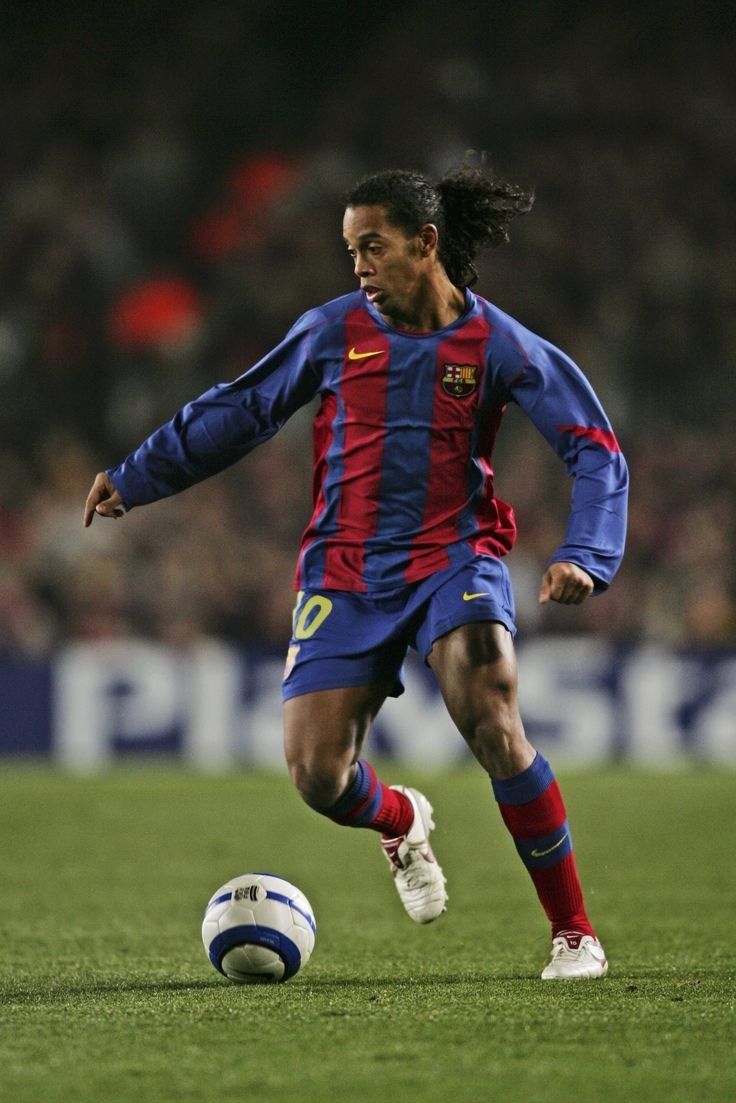
The Ronaldinho Rise and Fall is one of the most fascinating stories in football history. Few players have ever entertained fans like Ronaldinho, whose dazzling skills, infectious smile, and extraordinary creativity made him the face of world football in the mid-2000s. At his peak, he was widely regarded as the best player on the planet, winning the FIFA World Player of the Year award twice and the Ballon d’Or while inspiring Barcelona to domestic and European glory. Yet, despite possessing seemingly limitless talent, Ronaldinho’s time at the top was surprisingly short. His decline came almost as quickly as his rise, leaving football fans wondering what could have been.
This is the complete story of the Ronaldinho Rise and Fall, from the streets of Porto Alegre to the summit of world football, and the reasons behind his dramatic decline.
Ronaldinho’s Early Life: A Star in the Making
Born as Ronaldo de Assis Moreira on March 21, 1980, in Porto Alegre, Brazil, Ronaldinho grew up in a football-loving family.
His father worked at Grêmio and encouraged his son’s passion for the game before tragically passing away when Ronaldinho was just eight years old.
Even as a child, Ronaldinho displayed remarkable ball control and creativity. He spent countless hours playing futsal, a sport that helped develop the close control, quick feet, and improvisation that would later define his style.
By his teenage years, Brazil already viewed him as one of the country’s brightest young talents.
The Breakthrough at Grêmio
Ronaldinho made his professional debut for Grêmio in 1998.
It didn’t take long for fans to notice his extraordinary ability.
The dribbling embarrassed defenders.
His free-kicks became increasingly dangerous.
His confidence stood out even among experienced professionals.
One of his first major moments came during the 1999 Copa Libertadores, where his performances attracted interest from Europe’s biggest clubs.
Becoming a Global Star at Paris Saint-Germain
In 2001, Ronaldinho joined Paris Saint-Germain.
Although PSG struggled for consistency, Ronaldinho became one of Ligue 1’s biggest attractions.
His incredible goals, elastic dribbles, and audacious tricks made him a global sensation.
During the 2002 FIFA World Cup, Ronaldinho’s reputation reached another level.
The 2002 FIFA World Cup Changed Everything
Brazil entered the tournament with an attacking trio known as the “Three Rs”:
- Ronaldo
- Rivaldo
- Ronaldinho
Ronaldinho announced himself to the world with unforgettable performances.
The defining moment came in the quarter-final against England.
He scored one of the most famous goals in World Cup history, lifting a long-range free-kick over goalkeeper David Seaman.
Although he was later sent off, Brazil held on to win.
They eventually defeated Germany in the final to become world champions.
At just 22 years old, Ronaldinho had become one of football’s biggest stars.
Barcelona: The Beginning of Greatness
In 2003, Barcelona signed Ronaldinho instead of David Beckham.
It proved to be one of the greatest transfers in football history.
Barcelona were struggling financially and had endured difficult seasons.
Ronaldinho transformed everything.
His arrival brought excitement back to Camp Nou.
Supporters returned in huge numbers.
Most importantly, Barcelona started winning again.
Ronaldinho’s Golden Years
Between 2004 and 2006, Ronaldinho reached a level few footballers have ever achieved.
He possessed everything:
- Incredible dribbling
- Perfect first touch
- Vision
- Passing
- Long-range shooting
- Free-kicks
- Flair
- Joy
Unlike many superstars, Ronaldinho always seemed to play with a smile.
Football looked effortless.
Fans from every club admired him.
Even rival supporters applauded his brilliance.
Winning the Ballon d’Or
The Ronaldinho Rise and Fall reached its peak in 2005.
That year he won:
- Ballon d’Or
- FIFA World Player of the Year
- La Liga
- FIFA FIFPro World XI
He was unquestionably the best footballer in the world.
Many legends—including Zinedine Zidane, Thierry Henry, and Ronaldo Nazário—praised him as the game’s finest player.
The Standing Ovation at the Santiago Bernabéu
Perhaps Ronaldinho’s greatest individual performance came against Real Madrid in November 2005.
Barcelona defeated their biggest rivals 3-0.
Ronaldinho scored twice after mesmerizing Madrid’s defenders with breathtaking dribbles.
As he left the field, Real Madrid supporters stood and applauded him.
Only a handful of opposition players in history have received a standing ovation at the Santiago Bernabéu.
It remains one of football’s most iconic moments.
Champions League Glory
The following season, Ronaldinho guided Barcelona to Champions League success.
Barcelona defeated Arsenal 2-1 in the 2006 final.
Although Ronaldinho did not score in the final, he played a key role throughout the tournament.
He had now conquered both Spain and Europe.
Many believed he was beginning a dynasty.
Instead, it proved to be the peak of his career.
Why Ronaldinho Declined
The Ronaldinho Rise and Fall became one of football’s biggest talking points because his decline happened so quickly.
Several factors contributed.
1. Lifestyle and Nightlife
Ronaldinho openly admitted he loved enjoying life.
Parties, late nights, and a relaxed lifestyle gradually affected his fitness.
As younger players became more disciplined, Ronaldinho’s physical condition began to decline.
2. Lack of Professional Discipline
Unlike Cristiano Ronaldo or Lionel Messi, Ronaldinho relied heavily on natural ability.
As football became faster and more demanding, maintaining peak fitness became essential.
Ronaldinho struggled to match the discipline required to remain at the highest level.
3. Injuries
Recurring injuries reduced his explosiveness.
His acceleration and agility—once his greatest weapons—began to fade.
Without those qualities, defenders found it easier to contain him.
4. Barcelona’s Changing Project
By 2008, Barcelona were entering a new era.
Frank Rijkaard departed.
Pep Guardiola became manager.
Guardiola wanted a younger, more disciplined squad.
Ronaldinho was no longer central to Barcelona’s plans.
That summer, he left for AC Milan.
The AC Milan Years
Ronaldinho still produced moments of brilliance in Italy.
He helped AC Milan win the Serie A title in 2010–11.
However, he was no longer the unstoppable force who had dominated Europe.
His consistency had disappeared.
The football world realized his peak had ended far earlier than expected.
Returning to Brazil
After leaving Milan, Ronaldinho returned to Brazil.
He enjoyed spells with:
- Flamengo
- Atlético Mineiro
- Fluminense
His greatest success came with Atlético Mineiro, where he won the Copa Libertadores in 2013.
Even in his 30s, flashes of his genius continued to delight fans.
Ronaldinho’s Incredible Legacy
Although the Ronaldinho Rise and Fall story includes an early decline, his legacy remains extraordinary.
His career achievements include:
- FIFA World Cup winner (2002)
- UEFA Champions League winner
- Ballon d’Or winner (2005)
- Two-time FIFA World Player of the Year
- Two La Liga titles
- Copa Libertadores winner
- Confederations Cup winner
- Multiple domestic trophies
More importantly, Ronaldinho inspired an entire generation.
Players like Lionel Messi, Neymar, Vinícius Júnior, and countless others have spoken about his influence on their careers.
Messi himself has credited Ronaldinho with helping him settle into Barcelona’s first team.
Could Ronaldinho Have Become the Greatest Ever?
Many football fans believe Ronaldinho possessed the greatest natural talent of any player in history.
Some even argue he was more gifted than Lionel Messi or Cristiano Ronaldo.
Had he maintained the same discipline throughout his career, he might have dominated football for a decade.
Instead, his peak lasted only a few remarkable years.
Even so, those years were enough to secure his place among football’s immortals.
Frequently Asked Questions
Why did Ronaldinho decline so early?
The Ronaldinho Rise and Fall was influenced by several factors, including fitness issues, injuries, nightlife, and a lack of professional discipline compared with many of his rivals.
Did Ronaldinho win the Ballon d’Or?
Yes. Ronaldinho won the Ballon d’Or in 2005 after leading Barcelona to the La Liga title and establishing himself as the world’s best player.
Did Ronaldinho win the Champions League?
Yes. Ronaldinho won the UEFA Champions League with Barcelona during the 2005–06 season.
Is Ronaldinho one of the greatest footballers ever?
Yes. Despite a relatively short peak, Ronaldinho is widely regarded as one of the most talented and entertaining footballers in history because of his achievements, style, and influence on the game.
Final Thoughts
The Ronaldinho Rise and Fall is a reminder that football greatness is about more than talent alone. Ronaldinho reached heights that very few players have ever experienced, dazzling fans with a style that blended joy, creativity, and unmatched skill. Although his peak was brief, the memories he created continue to inspire football lovers around the world.
For many supporters, Ronaldinho was not just one of the greatest players ever, he was the player who made them fall in love with football.